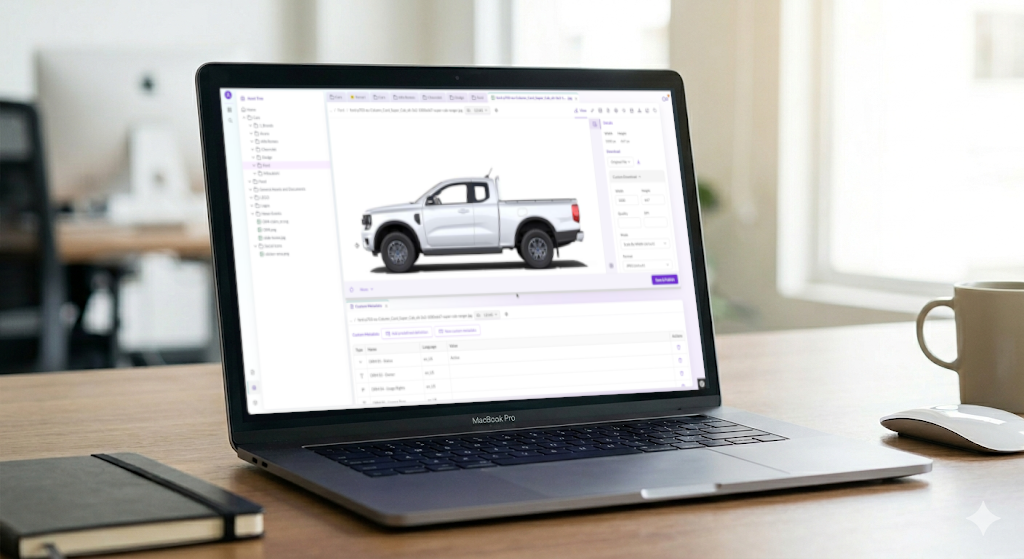
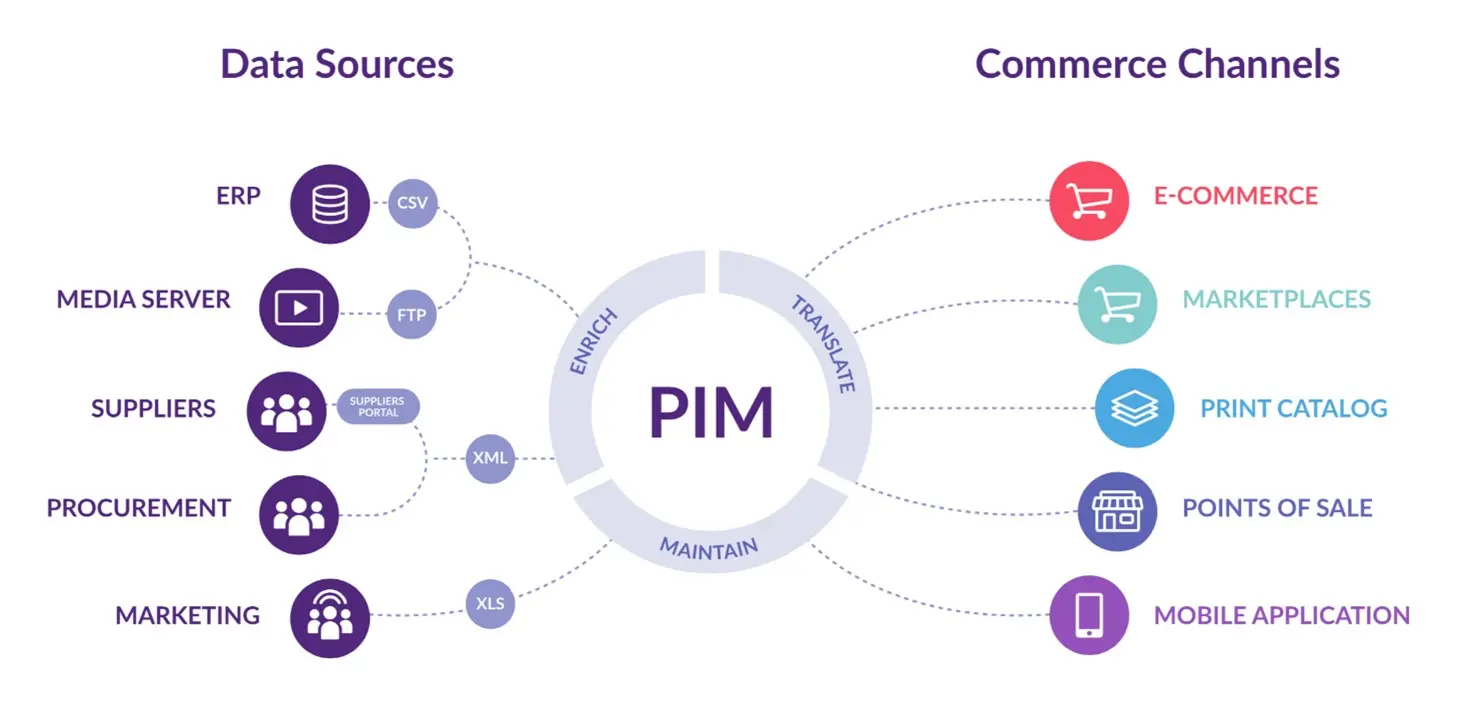
A PIM (Product Information Management) software solution centralises all product information in a single repository and distributes it consistently and up to date across all sales and communication channels.
The implementation project unfolds in stages, with initial results appearing as early as the first phases.
An effective PIM system should provide easy import and export functionalities to support integration with other business systems. It should also allow data to be organised into categories and subcategories for more intuitive navigation. Additional valuable features include version control, multilingual support, and user roles and permissions management.
A good PIM can improve product visibility on search engines. By using relevant keywords in PIM fields such as titles, descriptions and tags, products are more likely to rank for relevant searches. However, it is important to avoid keyword stuffing, as this may be penalised by search engines.
PIM simplifies translation management for international markets by providing a single access point for all versions of product information. With the integrated AI support available in our platform, basic translations are generated automatically and then reviewed by human operators, reducing localisation time and costs by up to 70% compared to a fully manual workflow.
ETIM (European Technical Information Model) is the international standard for classifying technical products, widely adopted in the construction, HVAC, and lighting industries. It defines a common language — shared classes, features, and values — that allows manufacturers, distributors, and installers to exchange product information accurately and without ambiguity. Adopting ETIM means fewer errors in projects, faster purchasing processes, and meeting the expectations of a market increasingly driven by data interoperability.
PIM is the ideal control point for anyone working with the ETIM standard: it allows you to classify products according to ETIM classes, enrich data with the relevant codes, and manage multiple versions of the standard simultaneously. Once structured, the information can be exported in BMECat format — the data exchange format associated with ETIM — ready to be distributed to retailers, partners, and industry platforms. All of this in multiple languages, from a single system updated at the source.
A PIM centralises product information and allows you to prepare it for websites, e-commerce platforms, marketplaces, and digital or printed catalogues. Each destination can receive a selection of data tailored to specific formats, languages, and attributes. Distribution takes place through the integrations and workflows defined during the project, reducing the need to manually update the same information across different systems.